Drawing on a document shouldn't cost a fortune.
Kisheet is takeoff and PDF markup software for Windows, made by people from the IT side of construction who have worked alongside estimators and kept their software running. One price for your whole company. Buy it once and keep it. In an age when most software is built to keep charging you, being on the customer's side is the core of who we are.
Where we come from
We've worked alongside estimators doing takeoffs on deadline, and we've been the people setting up the software, renewing the licenses and moving seats around when someone new started. The job didn't change much over the years: open the drawings, measure, count, mark them up, send the numbers. The bill for doing it changed a lot.
We've also seen firsthand how slow and frustrating the usual tools can be, how unhappy the people using them are, and how rarely the small quality-of-life fixes that would make a takeoff easier and faster ever arrive.
Licenses moved to subscriptions you can never stop paying. Prices went up per person, so every new estimator, project manager and reviewer added to the cost. Tools people used every day, like counts and links to Excel, moved into higher tiers. Buying the software outright stopped being an option. None of that made a takeoff any faster.
What we decided
We think it shouldn't cost that much to draw on a document and count what's on it. So we built Kisheet: a fast Windows app that measures, counts, marks up and prices construction drawings, and sells the way software used to. One license covers your company, however many people use it. Buy it once and keep the version you paid for, or subscribe by the month if that suits you better. Every paid plan gets the full takeoff toolset.
We'd like this corner of the software world to have real competition again. Good tools at fair prices make everyone raise their game, and the people who end up better off are the estimators.
How we make money
One way: selling Kisheet licenses. Not ads, not your data, not a premium tier holding back the tools you need. If a feature makes your takeoff better, it belongs in the product you paid for.
What we promise
- Per company, never per seat. Hire another estimator without buying another license.
- A bought license is yours. It's a file on your computer that never checks in, so it keeps working whatever happens to us.
- The full toolset in every paid plan. No takeoff tool held back for a higher tier.
- Your drawings stay on your PC. We never receive them, and we never sell your data or make money from it. How we handle data
- Straight answers. We label what's built and what isn't, and we publish our prices.
Why "Kisheet"
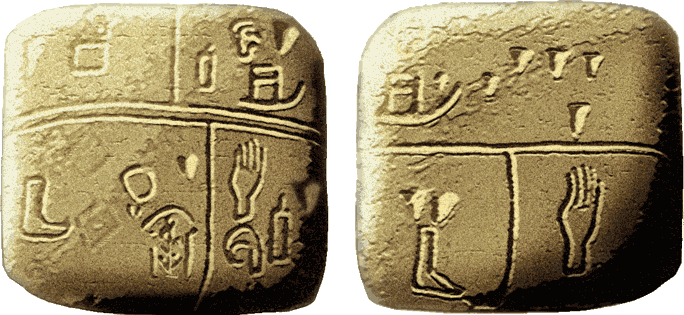
Kisheet is named after the Kish tablet, a small limestone tablet from the ancient city of Kish, in what is now Iraq. It dates to the late fourth millennium BC, more than 5,000 years ago, and it is one of the oldest known examples of writing. Its signs have never been fully read.
What we do know is what writing was mostly used for at the time. The thousands of clay tablets that survive from the same era are overwhelmingly accounts: grain, livestock, land, labour and rations, who supplied what and how much. Before writing was used for stories, it was used for counting.
About a thousand years later, scribes were doing work an estimator would recognise. They worked out how many bricks a wall needed and how much earth a canal would move, using standard rates of work per person per day, so they could plan the labour. Historians describe it as quantity surveying.
That's the job we build for: reading a drawing, counting what's on it and turning it into a number someone can bid. Estimating is one of the oldest jobs writing was made for. The sheet is the drawing sheet and the estimate sheet, and the KI in our logo is a ruler and a dimension line, to signify our focus on measurement.
Who we are
Kisheet LLC is an independent software company. It is self-funded, with no outside investors, so nobody else has a say in our prices. We come from IT in the construction industry, working alongside estimators, and we design, build and support Kisheet ourselves.
Talk to us
Email hello@kisheet.com. Tell us what you bid, what slows you down and what you'd change. See what changed lately.
Sources for the history
- Kish tablet: limestone, from Kish (Tell al-Uhaymir, Iraq), late fourth millennium BC, undeciphered. Drawing: José-Manuel Benito, Wikimedia Commons (public domain). Kish tablet (overview and references).
- Early writing as accounting: R. K. Englund, “Accounting in Proto-Cuneiform”, and H. J. Nissen, P. Damerow and R. K. Englund, Archaic Bookkeeping (University of Chicago Press, 1993).
- Building estimates: E. Robson, “Building with bricks and mortar: quantity surveying in the Ur III and Old Babylonian periods” (1996), and Mesopotamian Mathematics, 2100–1600 BC (Oxford, 1999).
